The Legend of Zelda: A Saga Written in Courage and Time
From a golden cartridge in 1986 to the boundless skies of 2023, *The Legend of Zelda* has woven exploration, mystery, and quiet heroism into gaming's soul. This is the story of a silent elf, a sleeping princess, and a world that keeps calling us back.
Share
It begins with a whisper.
“It’s dangerous to go alone. Take this.”
A single line, etched into the memory of every gamer who ever slipped a gold cartridge into an NES. In 1986, The Legend of Zelda didn’t just launch a franchise—it birthed a feeling. That sense of stepping into a vast, uncharted world with nothing but a wooden sword and a promise. No levels. No cutscenes. Just you, Hyrule, and secrets buried beneath every bush, behind every bombable wall.
Shigeru Miyamoto drew from his childhood explorations in Kyoto’s caves and forests. He wanted a game where discovery was the reward. And it worked. The original Zelda sold over 6.5 million copies, saved the Famicom Disk System in Japan, and proved adventure could be more than jumping platforms or shooting aliens. It was a map you filled in yourself—one heart container, one hidden staircase, one whispered rumor at a time.
A year later, Zelda II: The Adventure of Link dared to be different. Side-scrolling towns, experience points, magic spells—Link could level up like an RPG hero. It was brutal, unforgiving, and deeply misunderstood at the time. But it planted seeds: the idea that Hyrule could stretch beyond top-down grids, that Link’s journey might evolve in unexpected ways.
# The Heart of Hyrule: From Past to Future
Then came 1991.
A Link to the Past.
If the first game was a spark, this was a wildfire. Two parallel worlds—light and dark—flipped with a mirror. A sprawling overworld packed with 12 dungeons, hidden caves, and a story that finally gave Ganon a face. The Super Nintendo’s colors bloomed, the music soared, and the Master Sword felt earned. To this day, fans call it perfection. It wasn’t just a sequel. It was a declaration: This is what Zelda can be.
The Game Boy followed with Link’s Awakening in 1993. Stranded on Koholint Island, Link wasn’t saving Hyrule—he was trying to wake a sleeping Wind Fish, knowing the island would vanish with the dream. Mario enemies popped up in cameos. A flying rooster carried him across gaps. It was small, strange, and heartbreaking. The first Zelda to say: This world isn’t real. But it matters.
And then—1998.
The world held its breath.
Ocarina of Time wasn’t just a game. It was a miracle.
The N64 brought Hyrule into three dimensions, and nothing was ever the same. You rode Epona across Hyrule Field at sunset. You pulled the Master Sword and aged seven years in a single cutscene. You played the Song of Storms in a windmill and watched time ripple. It wasn’t just technically brilliant—it felt alive. Critics gave it a 99 on Metacritic. Fans gave it their childhoods.
But Ocarina did something else: it broke time.
The ending split the timeline into three branches—Child, Adult, and Fallen Hero. Nintendo didn’t confirm it until Hyrule Historia in 2011, but the seeds were there. Every game after would fit somewhere on that fractured tree.
Two years later, Majora’s Mask used the same engine to tell a darker, stranger tale. Three days. A falling moon. Masks that turned Link into a Deku, a Goron, a Zora. A story about grief, regret, and saying goodbye. It was rushed, raw, and remains one of the most human games ever made.
The GameCube brought The Wind Waker in 2002—cel-shaded, bright, and bold. At first, fans recoiled from Toon Link’s big eyes. Then they sailed the Great Sea, hunted Triforce shards, and cried when the King of Red Lions revealed his truth. It was proof: Zelda could be joyful and devastating in the same breath.
Twilight Princess followed in 2006, launching on both GameCube and Wii. Wolf Link prowled shadowy realms. Midna—sassy, broken, unforgettable—stole every scene. It was the darkest mainline Zelda, a counterpoint to Wind Waker’s light. Motion controls divided players, but the world, the music, the final duel with Ganondorf on horseback? Unforgettable.
The DS era gave us Phantom Hourglass and Spirit Tracks—stylus-drawn paths, ocean charts, and yes, a train. They were lighter, shorter, but full of charm. Meanwhile, Skyward Sword (2011) tried to make motion control the future. Link’s sword followed your wrist. The sky was a hub. The story revealed the origin of the Master Sword, Demise, and the endless cycle of hero and villain. It was ambitious. It was flawed. It was Zelda.
Then, silence.
Nintendo took a break. Fans waited.
And in 2017, everything changed—again.
# The Wild Breath of a New Era
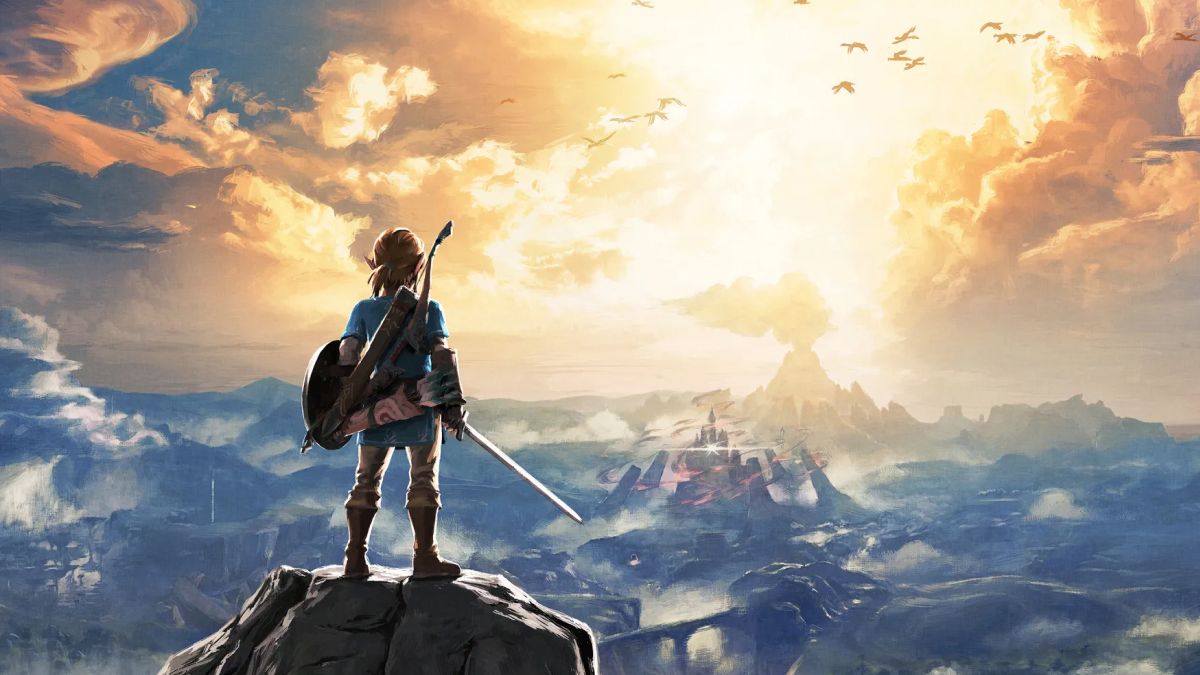
Breath of the Wild didn’t just launch with the Switch. It defined it.
No more linear dungeons. No more “go here, do this.” Just a ruined Hyrule, a paraglider, and a voice saying: “It’s up to you now.” You could climb anything. Cook anything. Fight with a stick or a korok leaf. The physics engine became your playground. Shrines replaced dungeons. Memories replaced cutscenes. It sold 33 million copies. It won Game of the Year. It made every open-world game after it feel small.
Six years later, Tears of the Kingdom (2023) said: Hold my Zonai device.
Sky islands. Underground depths. Fusable weapons. A car made of logs and fans. It wasn’t just bigger—it was wilder. Link built machines. Zelda studied history. The story converged all timelines into one final Hyrule. It sold 20 million in months. It proved sequels could outdream their predecessors.
And in 2024?
Echoes of Wisdom finally put Princess Zelda in the starring role. No sword. No bow. Just echoes—copies of tables, rocks, even enemies. A top-down return to form, but with a twist: the hero wasn’t the one with the blade. It was the one with the ideas.
The spin-offs deserve love too.
Hyrule Warriors turned Zelda into a battlefield brawler. Cadence of Hyrule made you dance through dungeons to the beat of remixed tunes. Link’s Crossbow Training was a tech demo. The CD-i games… well, let’s not speak of those.
Handhelds carried the torch between consoles. Oracle of Seasons and Ages linked via passwords. Minish Cap shrank Link to ant size. A Link Between Worlds let you rent items and merge into walls. Each felt essential, not filler.
# Where to Begin in 2025?
There’s no wrong door.
Want the classic journey? Start with A Link to the Past on Switch Online.
Want the full 3D evolution? Ocarina of Time 3D, then Breath of the Wild.
Want to feel the timeline breathe? Play Skyward Sword HD (origins), Ocarina (split), Wind Waker (Adult), Twilight Princess (Child), Breath (convergence).
Or just pick one.
Every Zelda is someone’s first. Every Zelda is someone’s favorite.
The future?
Switch 2 looms. Enhanced Breath and Tears ports are rumored. A new top-down Zelda? A full 3D epic? Aonuma smiles in interviews and says: “We’re always thinking about what’s next.”
But here’s the truth:
Hyrule doesn’t need a new game to live.
It lives in the memory of your first Korok seed. Your first blood moon. The first time you played Sun’s Song and watched the sun rise.
It lives in the quiet courage of a boy in a green tunic.
In the wisdom of a princess who refuses to wait.
In the power of a kingdom that keeps rebuilding, no matter how many times it falls.
The Legend of Zelda isn’t just a series.
It’s a promise.
That no matter how dark the cave,
how high the tower,
how endless the sea—
There’s always a way forward.
There’s always a song to play.
There’s always a hero.
And sometimes…
that hero is you.
PSG Online
Author